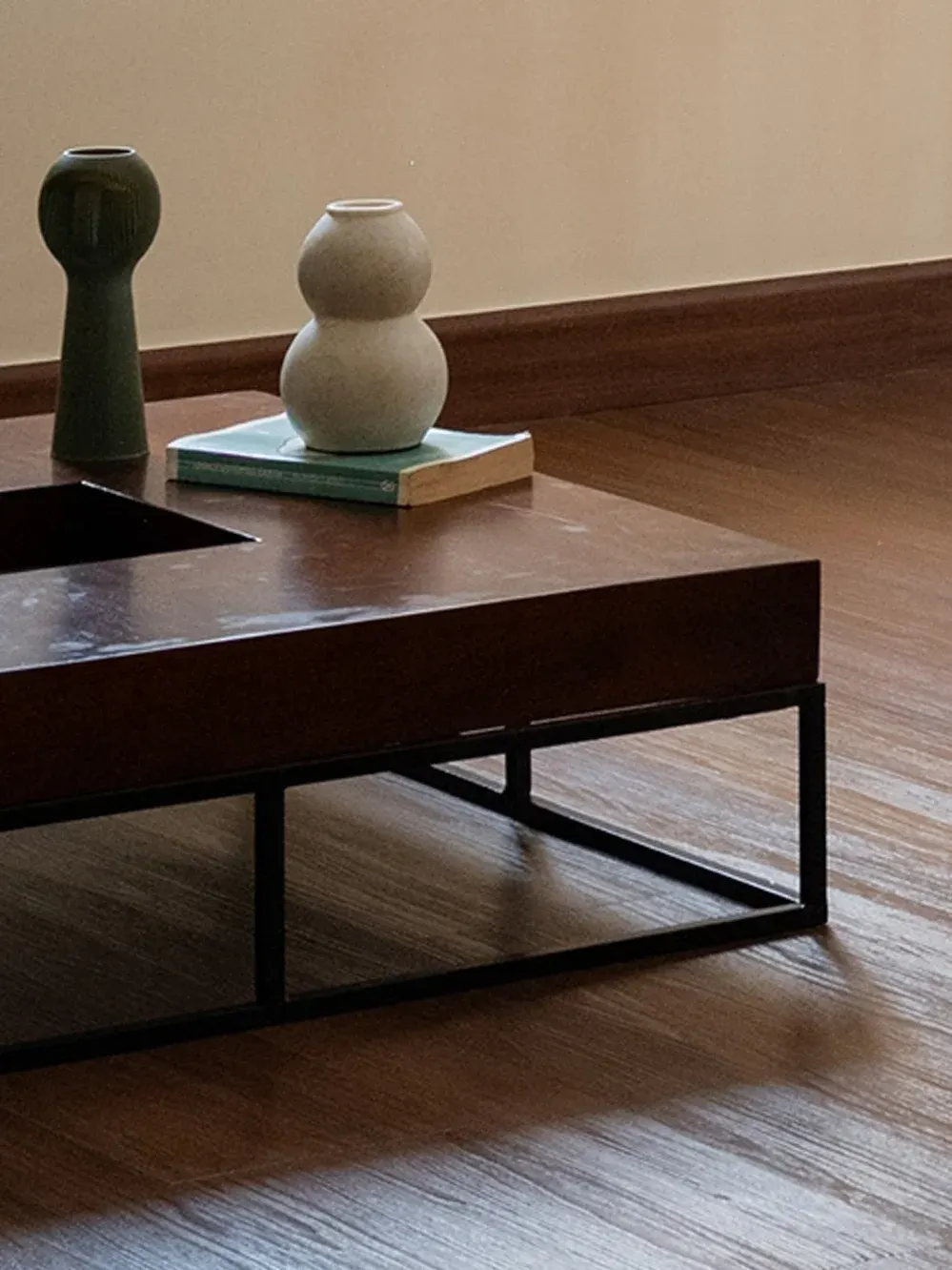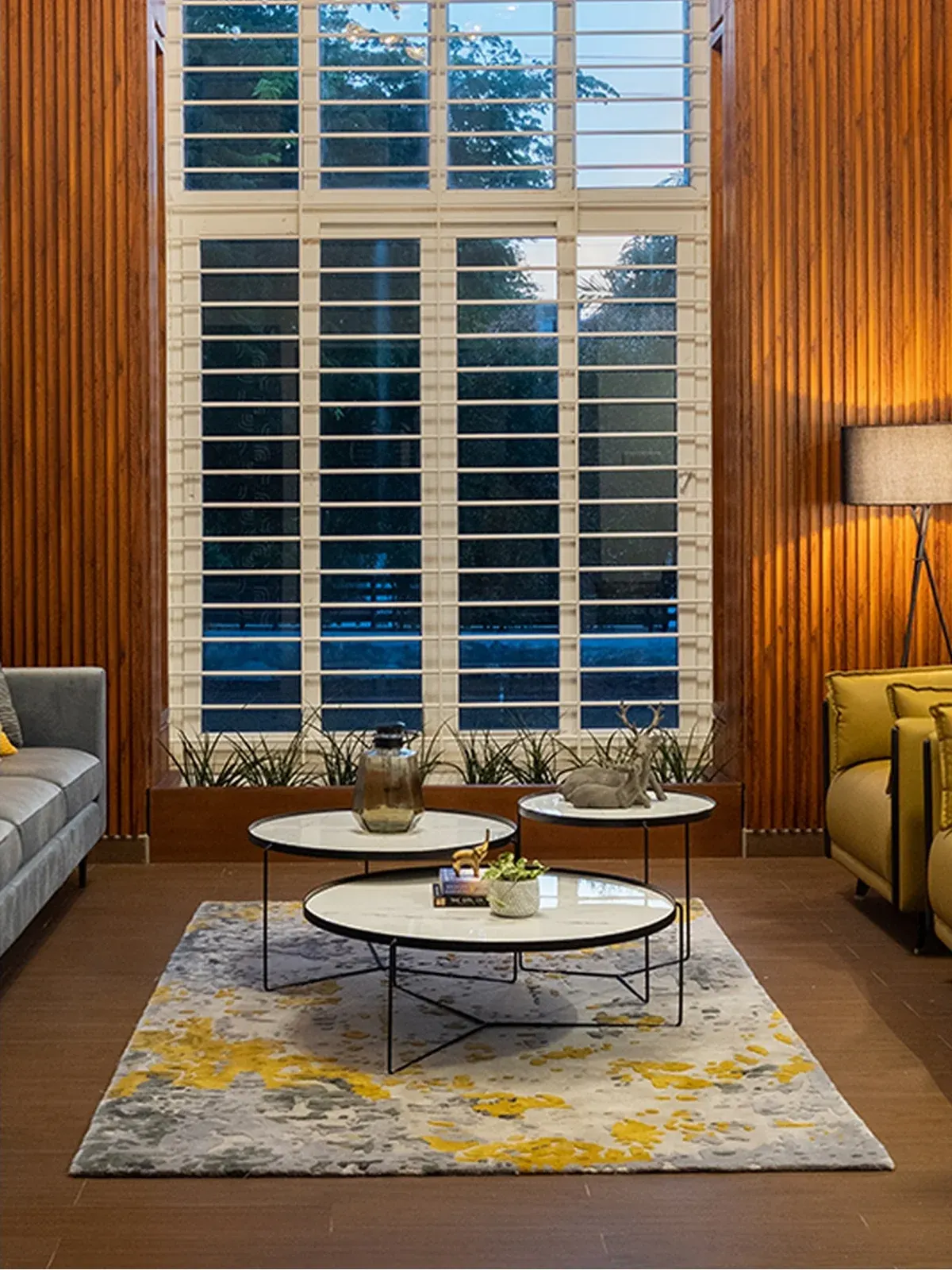
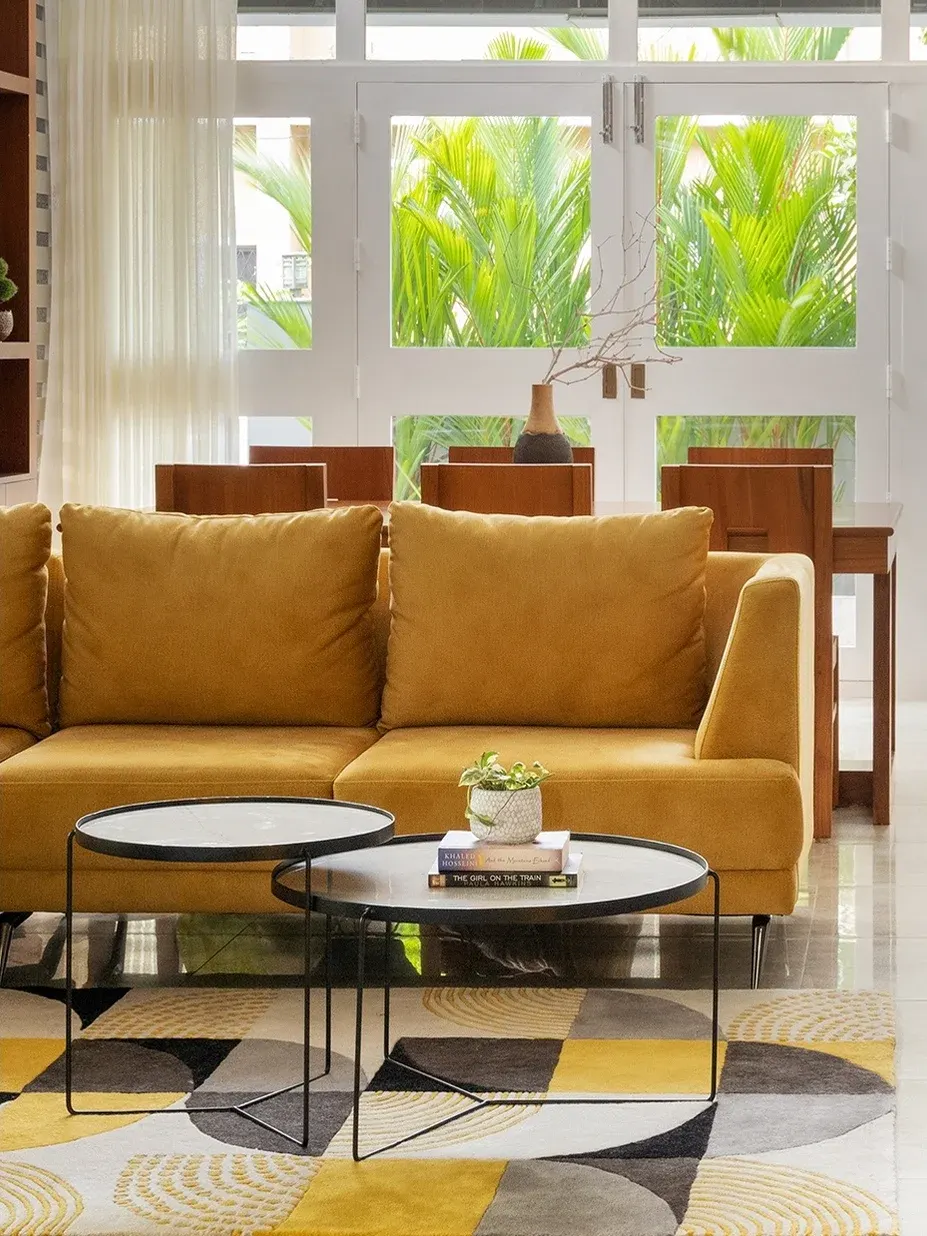
A table can anchor a seating area, keep a book beside a chair or give an entrance a useful place to pause. Although these pieces share a surface and a base, they ask different things of a room. Starting with the job you need a table to do makes the choice more considered than starting with its name.
A coffee table gathers the seating area
A coffee table usually sits within reach of the main seating, so its relationship to the sofa matters. Consider where people sit, where they place a cup and how they move between seats. A shape that looks balanced from across the room may feel less useful if it blocks a familiar walking route.
Use the seat height and the overall seating arrangement as reference points. Try the proposed footprint before committing, and consider how you will reach the surface while seated. A single table can give a room a clear centre; a group of smaller tables can offer several surfaces. Check the dimensions and arrangement of each piece in a set rather than judging the group from one photograph.
A side table works close to one person
A side table serves a more local purpose beside a sofa, chair or bed. List what it needs to hold: a lamp and book, a glass, a charging device or the things you reach for at night. That list will help you decide how much surface and storage you need.
Look at the arm of the chair or the top of the mattress when considering height. Test the reach from your normal sitting or sleeping position. If the table has drawers or a cupboard, allow room to use them. Check where a lamp cable would run and whether a plug will remain accessible.
A console gives a narrow space a role
A console often sits along a wall, behind a sofa or near an entrance. Its depth is especially important where people pass. Mark out both the furniture and the passage you want to keep, then walk through carrying the things you normally bring home.
Decide whether the console is mainly a display surface, a place for everyday essentials or a storage piece. An open base can keep the floor visible, while a cabinet offers somewhere to put things away. Check product-specific stability and installation requirements, particularly where children or pets use the space.
Consider the whole composition
Look beyond the tabletop. A broad base can feel substantial, while slim legs may leave a room visually lighter. Neither is automatically better; the right choice depends on the surrounding furniture, light and scale. Photographs are useful for mood, but confirmed dimensions and finish details should guide the final decision.
Finally, imagine the surface in use rather than perfectly styled. Leave room for everyday objects, comfortable movement and the way you like to live. Explore the coffee table collection or console table collection, and use a simple room plan to compare the pieces that catch your eye.